

The transition into the middle decades of life often correlates with a noticeable shift in the body’s response to everyday mechanical stress. Activities that were once routine, such as postural maintenance during sleep, recreational jogging, or lifting moderate loads, can initiate persistent nociception (pain signals). While chronic aches are often dismissed as an inevitable consequence of aging, these physical and biological transformations are largely manageable and responsive to proactive, non-pharmacological interventions.
The underlying factors driving these symptoms are well-documented physiological changes, primarily encompassing alterations in musculoskeletal density, hormonal balance, and systemic inflammatory load. Effective management centers on addressing these root causes through preventative and restorative functional treatments, rather than solely focusing on symptomatic relief via medication or invasive procedures.
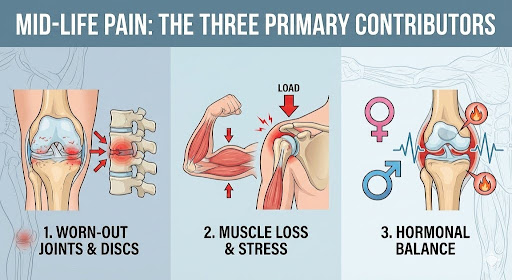
The Three Primary Contributors of Mid-Life Pain:
Contributor 1: Worn-Out Joints and Spinal Discs (Cartilage Loss & DDD)
The loss of protective cushioning within the joints and spinal column stems from two prevalent conditions: Osteoarthritis (OA) and Degenerative Disc Disease (DDD).
Osteoarthritis (OA) is the most common joint condition, characterized by the progressive erosion of articular cartilage—the smooth, protective tissue covering the ends of bones. This deterioration leads to changes in bone shape, reduced shock absorption, and increased friction. Weight-bearing joints such as the hands, hips, and knees are particularly susceptible to OA progression, causing chronic joint pain.
Degenerative Disc Disease, similarly to Osteoarthritis, is common wear-and-tear that occurs within the spongy discs between vertebrae. This ailment is accelerated as the shock absorption of these discs diminish over time. Both Osteoarthritis and Degenerative Disc Disease can cause pain, swelling, and stiffness that can eventually be debilitating.
Contributor 2: Sarcopenia and Biomechanical Stress
Sarcopenia is defined as the involuntary decline in skeletal muscle mass, strength, and function associated with aging. A critical consequence of sarcopenia is increased physical frailty and a higher burden of mechanical stress placed directly upon the joints and osseous (bony) structures.
This reduction in muscular support accelerates the Pain-Inactivity Cycle. As an individual experiences increased pain and inflammation, the natural tendency is to reduce physical activity and movement. This static behavior further exacerbates muscle atrophy (sarcopenia), leading to greater joint instability and amplified pain, creating a self-perpetuating, debilitating loop.
Contributor 3: The Endocrine-Inflammatory Axis
Hormonal status plays a vital, yet frequently understated, role in modulating systemic inflammation and musculoskeletal health in aging populations.
In women, the post-menopausal decline in estrogen is a significant driver of chronic joint discomfort. Estrogen is crucial for maintaining collagen synthesis, joint lubrication, and bone mineral density. Its depletion can weaken articular cartilage, predisposing the joints to degenerative conditions like OA. Similarly, in men, the reduction in testosterone contributes to decreased muscle mass (sarcopenia) and heightened joint inflammation. Maintaining hormonal equilibrium is integral to mitigating age-related inflammatory responses.
The Problem: Central Sensitization.
Prolonged, unrelenting chronic pain can result in maladaptive changes within the central nervous system (CNS). This constant afferent signaling (incoming pain messages) to the CNS can lead to Central Sensitization, a state where the spinal cord and brain become hypersensitive. Essentially, the neural pathways are perpetually “tuned up,” causing non-threatening stimuli to be interpreted as intensely painful, or magnifying existing pain. This phenomenon represents a learned amplification of the body’s internal pain alarm system.
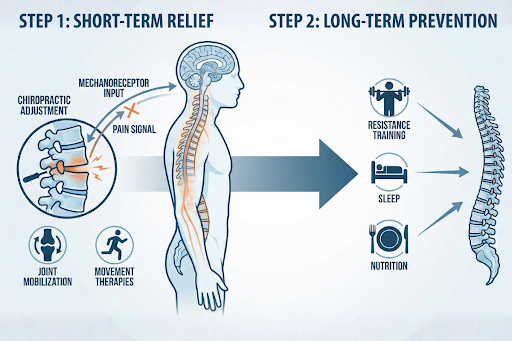
The Role of Chiropractic Care in Neuro-Musculoskeletal Modulation
Advanced chiropractic care offers a functional neurological perspective to manage chronic pain and an over-sensitized nervous system. By utilizing specific spinal adjustments and joint manipulation, practitioners aim to reset this state of hypersensitivity. This is achieved by generating powerful, non-nociceptive input through the mechanoreceptors (sensory receptors located in joints and muscles) which can override the dominant pain signals and promote a return to a normal, functional neurological state.
Step 1: Re-Establishing Physical Resilience (Short-Term Relief)
The initial phase focuses on reducing nerve irritation and restoring optimal joint mobility and nerve function to provide rapid relief.
Joint Mobilization and Adjustment restores normal physiological motion to restricted spinal segments and joints, thereby reducing nerve root irritation and transmitting healthy, integrated signals back to the brain. Complementary targeted therapies, such as soft tissue management (massage, stretching) for muscles, ligaments, and tendons, address mechanical restrictions and enhance joint range of motion.
A key aspect of retraining the hypersensitive nervous system is the integration of simple movement therapies. Low-Impact Movement Sequences (e.g., a “2-Minute Joint Reset”) which may include gentle exercises like the cat stretch, single-leg balance, or cervical chin tucks, can be performed hourly. These gentle, repetitive motions are designed to flood the CNS with positive mechanoreceptor input, decreasing stiffness and progressively normalizing the pain-sensing pathways.
Step 2: Biomechanical Conditioning and Lifestyle Modifiers (Long-Term Prevention)
Long-term protection against the effects of aging is a holistic endeavor, with muscular strength serving as the primary defense against joint degeneration.
Resistance Training: Focusing on high repetition protocols with low to moderate loads is beneficial for building muscular endurance and density, which counteracts sarcopenia and stabilizes the joints. This must be coupled with sound ergonomic habits for sitting, sleeping, and lifting to minimize long-term mechanical strain.
Systemic Support: Nutrition and sleep are critical modulators of inflammation. Appropriate hydration and a balanced diet provide the necessary biological resources to combat systemic aging, while high-quality sleep enables essential tissue repair and crucial nervous system downregulation.
Ready to Reclaim Your Body?
Aging doesn’t require you to wince every time you engage in an activity or maneuver. Don’t accept the aches and pains, be proactive and adopt a new drug-free non-surgical method to enjoy your golden years pain free. To eliminate the root causes of your pain contact the medical experts at Aligned Medical Group and schedule your initial consultation and assessment today.